

Do I Need a Sitemap for My Website?
Many small business websites don't need you to do anything about a sitemap. If your site was built on a common platform, it has very likely made one already, and if you have a few pages all linked from your menu, Google can find them without one anyway. The word turns up in checklists and developer emails as if it were urgent. For most owners it's worth one two-minute check, and then you can forget about it.
Do I need a sitemap for my website?
Probably not, if your site is small and every page is linked from somewhere else on it. Google's own documentation on whether you need a sitemap says you might not need one if your site has about 500 pages or fewer, if Google can reach all the important pages by following links, and if you don't have lots of video or news pages you want showing in search. That describes a great many local business websites.
The same page lists the cases where one does help: a large site, where it's harder to be sure every page is linked; a site rich in media, or one appearing in Google News; and a new site with few links from other websites pointing at it. That last one is the case most likely to apply to you, and even then the fix is usually already in place.
What is a sitemap, in plain terms?
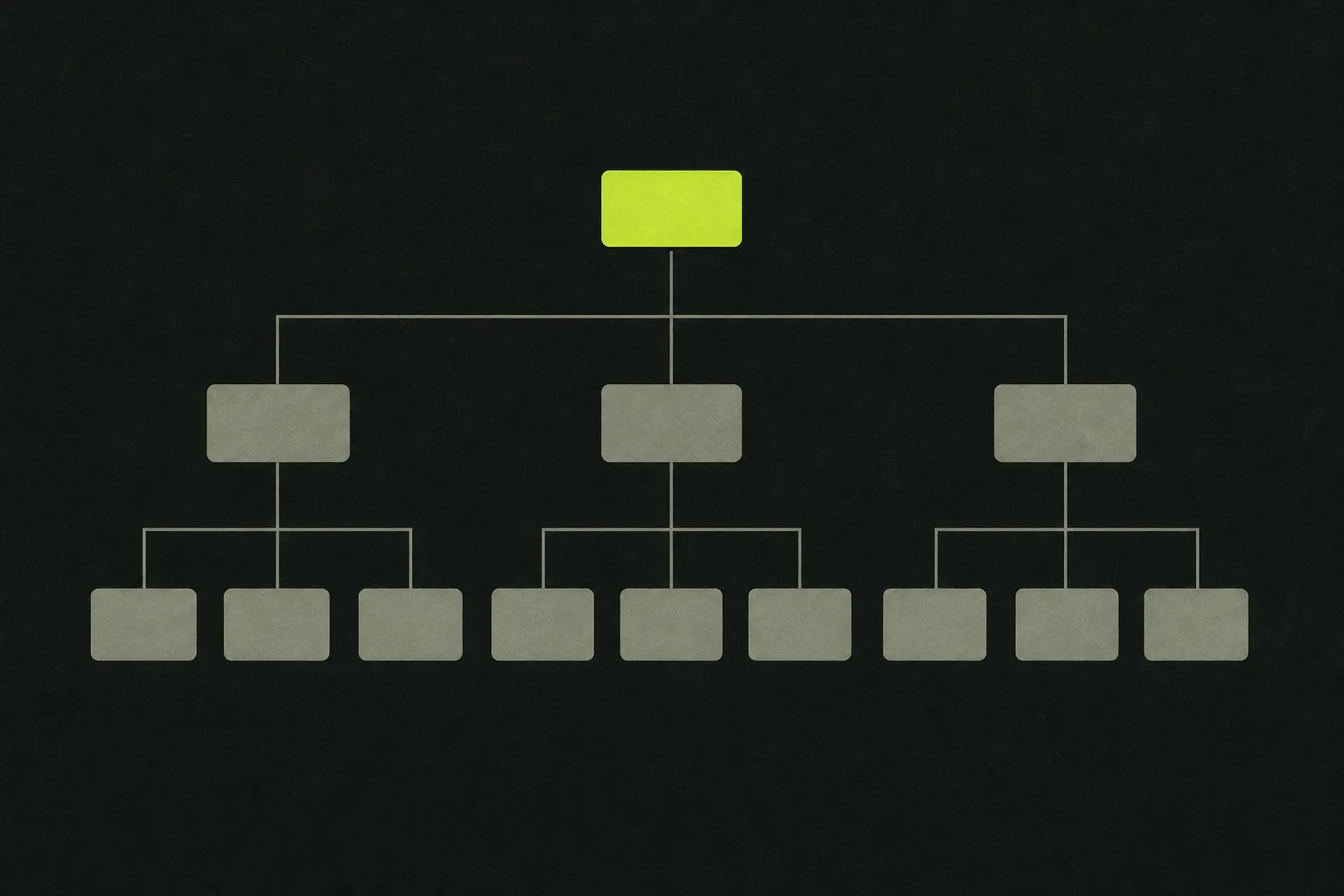
A sitemap is a file on your website that lists your pages for search engines, a sort of contents page that no customer ever sees. Google defines it as a file where you give information about the pages, videos and other files on your site and how they relate. It isn't the menu, and it isn't a page your visitors read. It sits quietly in the background for Google and other search engines to pick up.
It is also only a suggestion. Google's guidance on building and submitting a sitemap calls submitting one "merely a hint", with no guarantee Google will download it or use it. A sitemap helps Google find pages. It doesn't make Google show them.
When is a sitemap actually worth your attention?
Mostly after something about your site has changed. Here's how the usual situations shake out, going by what Google itself says.
| Your situation | Do you need to act? | Why |
|---|---|---|
| A small site on WordPress, Wix or Blogger | Nothing to do | Google says these platforms have likely already made a sitemap available. |
| A handful of pages, all linked from the menu | Probably not needed | Google can find every page by following your own links. |
| A brand new site that nothing else links to yet | Worth checking one exists | Google names new sites with few outside links as a case where a sitemap helps. |
| Just rebuilt, moved platform or changed address | Worth checking one exists | Page addresses may have changed, and you want Google to find the new ones. |
| Hundreds of pages, or lots of video | Yes | Google names large sites and sites rich in media as the ones that need one. |
The rebuild row is the one people miss. When a site moves platform or gets redesigned, page addresses often change, and it's worth confirming the new site has a sitemap listing the new addresses rather than none at all. If you're changing your web address too, our guide to redirecting your old website to a new domain covers the bigger job that comes with it.
How do you check whether your site already has one?
Ask whoever built it, or look for yourself in a couple of minutes. Google says that if you use a platform such as WordPress, Wix or Blogger, it has likely already made a sitemap available to search engines and you don't have to do anything. So the first question is simply what your site is built on.
The second place to look is a small file called robots.txt, which many sites keep at their main address followed by /robots.txt. Google's guidance lets a site point to its sitemap from that file with a line starting "Sitemap:", so if you see one there, you have your answer. If you'd rather not go poking about, send this to whoever looks after your site:
Could you confirm whether my website has a sitemap, what its address is, and whether it updates on its own when I add a page? If Google Search Console is set up for the site, could you check it has been submitted there too?
Do you need to submit a sitemap to Google?
Not always, but it costs nothing and it's the one version of this job worth doing yourself if you already use Search Console. Search Console is Google's free dashboard for site owners, and Google's guidance names its Sitemaps report as one of the ways to submit a sitemap: you paste the sitemap's address into it and press submit. The report is also where you'd see whether Google had any trouble reading the file.
If you haven't set Search Console up, that matters more than the sitemap does, because it's how you find out whether Google has your pages at all. Our guide on checking whether your website is working walks through what it shows. And if your site is new and nobody is finding it yet, the guide on why a new website gets no visitors covers the wider set of reasons, of which a missing sitemap is rarely the main one.
What should you do next?
Find out what your site is built on, check it has a sitemap once, and submit it in Search Console if you use it. After a rebuild or a move, check again. Beyond that, a sitemap is one of the rare bits of website jargon that genuinely is someone else's problem. There's more on being found in our guides to fixing your website and getting found.
If you'd rather hand the whole website to someone else, ByRender builds from a short form and sends a private preview link before anything is owed, with setup from £495 and care, covering hosting, security, backups and edits, from £69 a month. You can see what a finished render looks like or start the form when you're ready.
Frequently asked questions
Will a sitemap help my website rank higher?
Not in itself. Google describes a sitemap as a way to help it discover the pages on your site, and says plainly that it doesn't guarantee everything listed will be crawled and indexed. Being found is only the first step; what ranks is still down to the pages themselves.
Should I make a sitemap myself?
On a site built with a platform, you shouldn't need to, because the platform usually makes one for you. Google does say a very small site of under a few dozen pages can have one written by hand, but for most owners that is a job for whoever built the site, not an evening's homework.