

Opening a Christmas Order Book
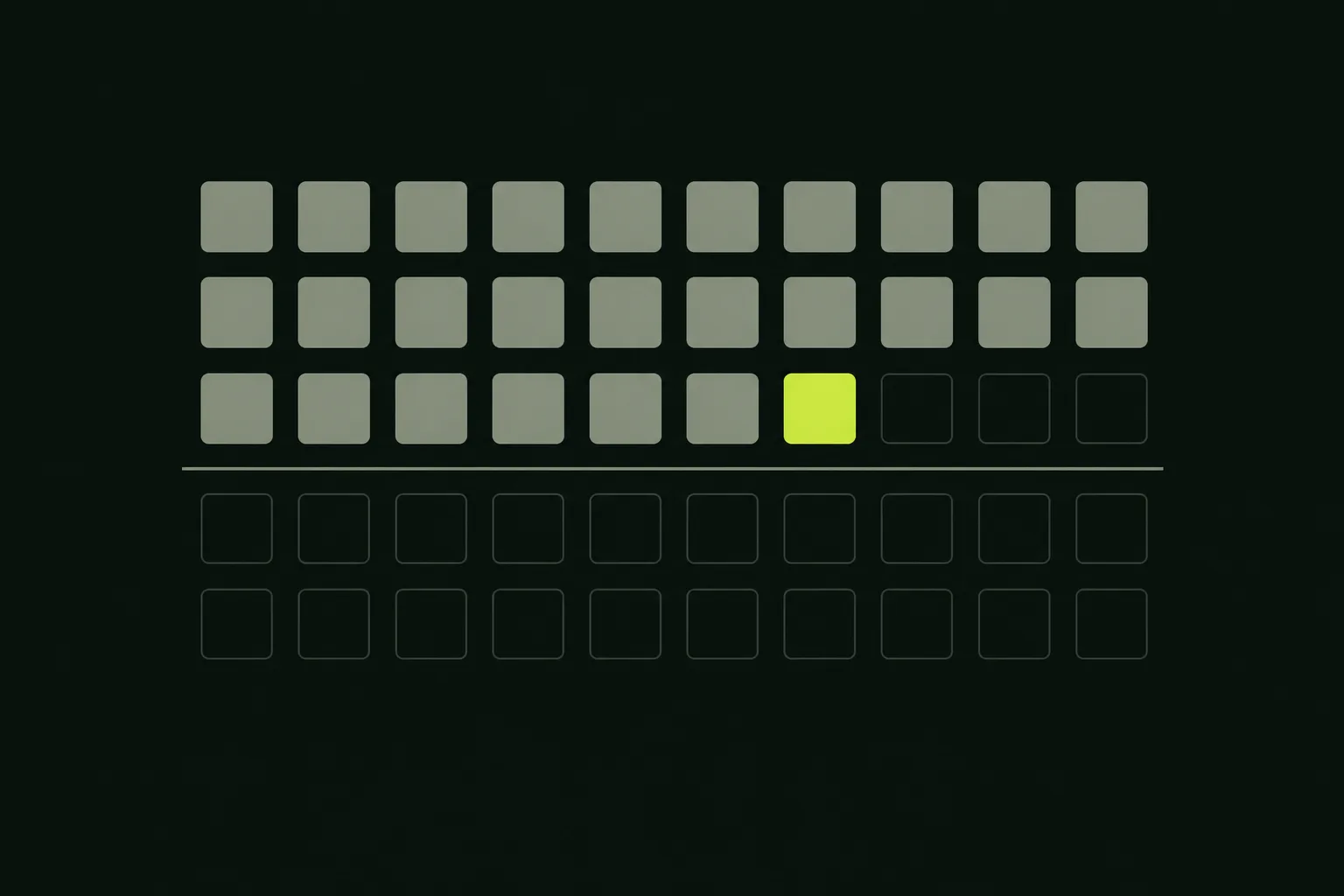
A Christmas order book is a list of what you have promised, to whom, and by when. Almost all of the work that makes it hold together happens before it opens, rather than in December when the messages are arriving faster than you can read them. Three decisions do most of that work: the date you stop taking orders, the number you can actually make, and what the page says once that number is gone. None of them is complicated. All three are much harder to make once the season has started.
What does a Christmas order book need before it opens?
A cut-off date, a realistic number, and a sentence ready for when you are full. Everything else is detail. The cut-off is the last day you will accept an order, which is not the same as the last day you will deliver one. The number is how many you can make in the days between, which almost nobody works out until they're already behind. The sentence is what the page says when the number is reached, and it's the one thing on this list that nobody writes in advance.
A season has a hard edge that ordinary trading does not. A missed order in March is a late order. A missed order on 23 December is a ruined one, and it can't be made good afterwards. That is why the rules below bite harder at Christmas than at any other time of year.
Do you have to give a delivery date before someone orders?
Yes, if you're selling at a distance, which covers orders taken through a website, a form, the phone or a message. Paragraph (j) of Schedule 2 to the Consumer Contracts Regulations 2013 lists, among the information a trader must give before the consumer is bound, "the arrangements for payment, delivery, performance, and the time by which the trader undertakes to deliver the goods, to perform the services or to supply the digital content". For a Christmas order book that means the collection or delivery date belongs on the page next to the price, before anyone commits, not in a reply once they have.
This is guidance about what the regulations say rather than legal advice, and a specific dispute turns on its own facts. The practical version is simple enough: if a customer can't tell from your page when they'll get the thing, the page isn't finished.
What happens if a Christmas order arrives late?
Potentially rather more than at any other time of year, because the date is the point. Section 28 of the Consumer Rights Act 2015 sets the default at "without undue delay, and in any event, not more than 30 days after the day on which the contract is entered into" where no time has been agreed. Thirty days is no use to anybody in December, which is the first reason to agree a date rather than leave it to the default.
The second reason is subsection (6). A consumer may treat the contract as at an end where delivery at the agreed time "is essential taking into account all the relevant circumstances at the time the contract was entered into", or where the consumer told the trader before the contract was made that delivery by that time was essential. A cake for Christmas Day is close to the clearest example of a date that is essential rather than merely preferred. Nobody wants it on the 27th.
That's not a reason to panic about taking seasonal orders. It's a reason to promise a date you can hold, and to stop taking orders at the point where you can no longer hold it.
Working out how many you can actually take
Do the arithmetic once, in September, with your own numbers rather than anyone else's. The shape of it is the same for a baker, a hamper maker or a photographer:
- Count the working days between now and your cut-off, then take out the ones already spoken for. School plays and the day job count.
- Multiply by what you can finish in a day, honestly, on a normal day rather than your best one.
- Take off a margin for the ones that go wrong, and for the orders you have already promised without writing down.
Say a cake maker can decorate four in a day, has eighteen usable days before the cut-off, and has already agreed six. That is seventy-two, less six, less whatever margin they think December deserves. The number is a decision, not a discovery, and once it's made you can put it on the page. Those figures are illustration only. The method is the point, and the answer is yours.
The sentence nobody writes in advance
Write the "we're full" message in September, while you're calm, and keep it where you can find it. In December you'll be writing it at eleven at night to someone who is disappointed, and it will come out worse. Something like this does the job:
Thank you for asking. Our Christmas order book is now closed, as we're fully booked for December. If you'd like to be first to hear when we open again in the new year, reply to this message and we'll add you to the list. Sorry to miss you this year.
It closes the door, it explains why, and it gives the person a reason to come back rather than a dead end. Put the same thing on the page as well, so most people never have to ask.
Do you need a booking system for this?
Usually not, and September is a bad month to learn one. A short form that captures the order and emails a confirmation, plus a spreadsheet you actually keep open, will beat a system nobody has time to set up properly. The rules that apply to the order itself, whichever way it arrives, are covered separately in the guide on taking orders through DMs and messages, and they don't change because the order is a seasonal one.
What a website adds here is the boring, useful part: a page that states the cut-off, the price and the date before anyone asks, and a form that writes the order down the same way every time. If you're still deciding whether any of this needs a site of your own, where to start with a first website is the wider question underneath this one.
Building that form in is a normal part of how we put a site together. We render the whole thing from a short questionnaire, send a private preview link, and only take payment if you keep it. Setup is from £495 and ongoing care afterwards is from £69 a month. If the order book opens in a few weeks and there's nowhere sensible for the orders to land, get in touch.
Frequently asked questions
When should the cut-off date actually be?
Work backwards from the last day you can physically make the thing, then take a few days off that for the ones that go wrong. The date customers see should be the one you can still hit on a bad week, not the one that only works if nothing goes wrong. A cut-off you quietly move is worse than a later one you hold.
Can I take a deposit to hold a Christmas slot?
Yes, and for made-to-order work most people do. Say plainly on the page what the deposit is, whether it comes off the final price, and what happens to it if the customer cancels. A deposit whose terms only appear after someone has paid is the part that causes arguments in December.
What if I get more orders than I can make?
Stop taking them and say so. The alternative is accepting orders you already know you can't fulfil, which turns a good problem into a refund and a bad review. A short waiting list costs nothing and gives the people you turned away somewhere to go next year.
Do I need to write all this down if I only make a handful?
The information duties don't scale with volume, so the same things have to be told to a customer whether it's five orders or fifty. The practical answer is that a small order book is easier to hold in your head and still easier to lose, because nobody thinks to write down the one thing they were sure they'd remember.